A Novel SPEAD-Based Approach to Overcome Steric Hindrances in GLP-1 Peptide Therapeutic ADA Assay
Purpose
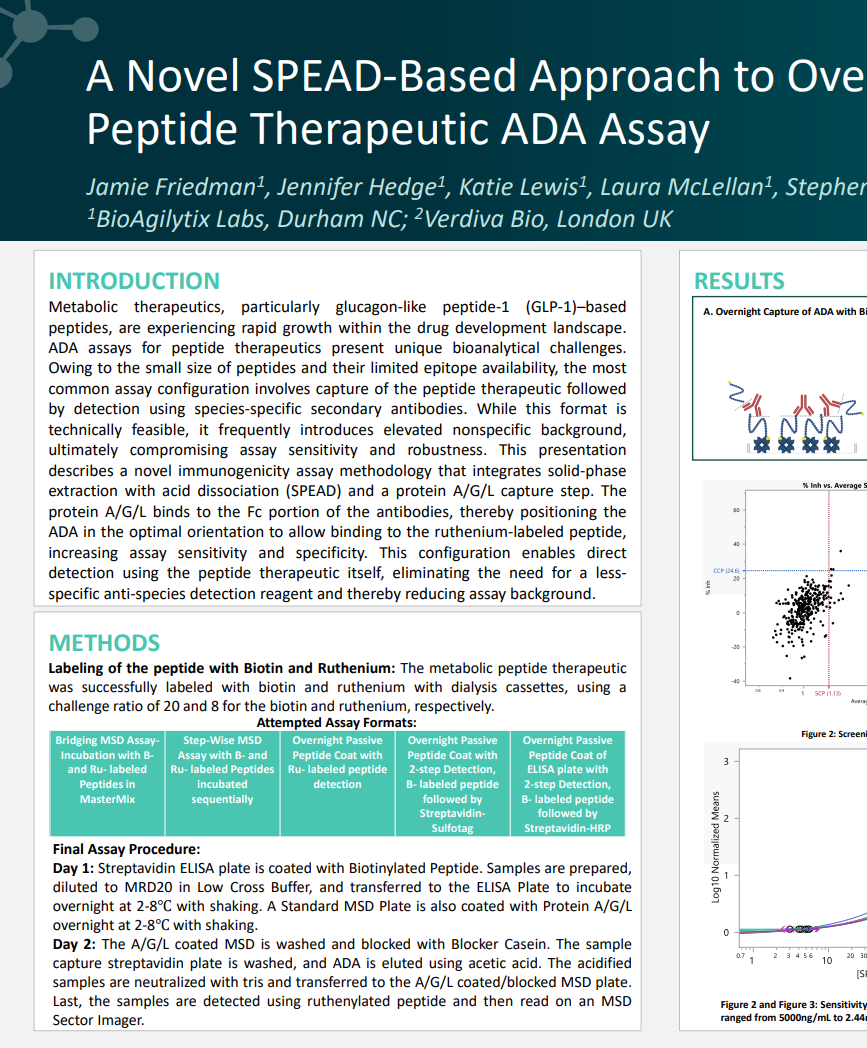
Metabolic therapeutics, particularly glucagon-like peptide-1 (GLP-1)–based peptides, are experiencing rapid growth within the drug development landscape. ADA assays for peptide therapeutics present unique bioanalytical challenges. Owing to the small size of peptides and their limited epitope availability, the most common assay configuration involves capture of the peptide therapeutic followed by detection using species-specific secondary antibodies. While this format is technically feasible, it frequently introduces elevated nonspecific background, ultimately compromising assay sensitivity and robustness. This presentation describes a novel immunogenicity assay methodology that integrates solid-phase extraction with acid dissociation (SPEAD) and a protein A/G/L capture step. The protein A/G/L binds to the Fc portion of the antibodies, thereby positioning the ADA in the optimal orientation to allow binding to the ruthenium-labeled peptide, increasing assay sensitivity and specificity. This configuration enables direct detection using the peptide therapeutic itself, eliminating the need for a less specific anti-species detection reagent and thereby reducing assay background.
A Novel SPEAD-Based Approach to Overcome Steric Hindrances in GLP-1 Peptide Therapeutic ADA Assay
Share this Article


 Copied!