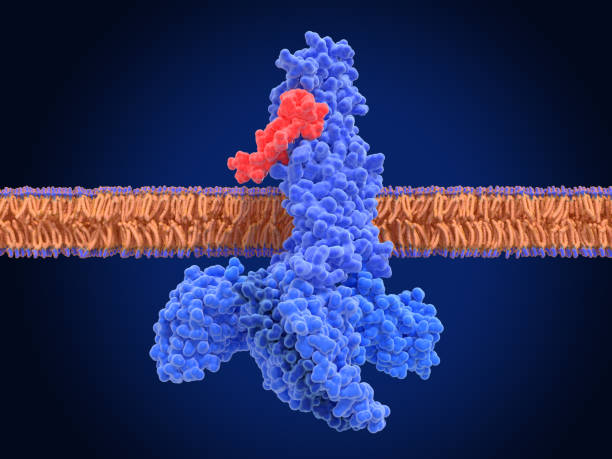
The GLP-1 revolution has reshaped the metabolic disease landscape, and the pipeline behind semaglutide and tirzepatide continues to expand at an unprecedented pace. Sponsors are now advancing next-generation GLP-1 receptor agonists, dual and triple agonists targeting GIP and glucagon receptors, amylin analogs, and a growing range of novel peptide therapeutics being developed for obesity, type 2 diabetes, metabolic dysfunction-associated steatohepatitis (MASH), and broader cardiometabolic indications. With this growth comes a bioanalytical challenge—peptide therapeutics with endogenous counterparts do not behave like small molecules or traditional biologics, and many drug developers are not fully prepared for what happens in the laboratory when these molecules interact with a biological matrix.
Pharmacokinetic (PK) assays must selectively quantify the administered peptide in a complex biological matrix. Anti-drug antibody (ADA) and neutralizing antibody (NAb) assays must detect immune responses in the presence of high circulating concentrations of active drug. At the same time, structural similarity to endogenous hormones can raise questions about analytical selectivity and the potential for cross-reactive immune responses. Further, the patient populations enrolled in these trials present matrices that evolve over the course of treatment in ways that can invalidate a method that worked at baseline. A bioanalytical strategy that fails to anticipate these challenges not only generates unreliable data but also leads to costly delays.
In this article, we examine the obstacles that make metabolic peptide bioanalysis difficult and explore key considerations when putting a bioanalytical strategy in place.
What Makes GLP-1 and Metabolic Peptide Therapeutics Different
Metabolic peptide therapeutics occupy an analytically awkward middle ground. They are too large and chemically complex for most generic small molecule PK assays yet often have circulating endogenous counterparts that can cause interferences. A semaglutide analog, for example, must be distinguished from native GLP-1 in a patient serum sample. Thus, a PK method must be selective for the therapeutic analyte and any analytically relevant metabolites without allowing the endogenous hormone to confound the result.
Beyond the endogenous counterpart challenge, these peptides often carry structural modifications such as fatty acid side chains, noncanonical amino acids, cyclization, or other features intended to extend exposure or alter receptor activity. These modifications can change extraction recovery, chromatographic behavior, ionization, adsorption, and the performance of assay reagents. Consequently, understanding the interaction between each modification and the analytical platform is a prerequisite for method development.
Key Challenges of GLP-1 Bioanalysis
Challenges of GLP-1 bioanalysis include:
- High structural homology. Synthetically engineered peptides closely mimic endogenous hormones, so traditional ligand-binding assays (LBAs) may suffer from significant cross-reactivity.
- Adsorption. Metabolic peptides are often modified with heavy lipid side chains to extend half-life. These hydrophobic elements cause the peptides to stick to lab plasticware, vials, and liquid chromatography (LC) columns, leading to sample carryover and poor recovery.
- Sensitivity and dynamic range. The assay must support the expected concentration-time profile of the therapeutic, including concentrations encountered during the terminal phase of the PK curve.
- Molecule-specific ionization and fragmentation. Sequence, lipidation, charge state, and noncanonical residues can influence ionization efficiency and product-ion formation.
- High drug interference. Many metabolic peptide therapeutics are designed to maintain prolonged systemic exposure, which can lead to high circulating drug levels that saturate the patient’s ADAs, interfering with standard bridging assay detection and potentially masking true positive immunogenic responses.
- Molecule-specific ionization and fragmentation. Sequence, lipidation, charge state, and noncanonical residues can influence ionization efficiency and product-ion formation.
Why LC-MS Methods for GLP-1 PK Assays Require Customization
Liquid chromatography-tandem mass spectrometry (LC-MS/MS) is the preferred platform for measuring PK in metabolic peptide programs. This platform offers:
- The selectivity needed to resolve drug from endogenous counterpart.
- The sensitivity and dynamic range needed to characterize the anticipated concentration-time profile.
- The specificity to distinguish parent drug from metabolites.
While generic LC-MS methods can often be deployed quickly for small molecules, LC-MS methods for GLP-1 and other metabolic peptides almost always require custom development.
Method development should begin with clarifying the clinical requirement and defining what is to be measured. The relevant result may be intact drug, a drug-specific molecular species, or a validated surrogate that reflects exposure, and the optimal LC-MS strategy is molecule-dependent:
- Extraction and recovery. Protein precipitation may be sufficient for some molecules and concentration ranges, while others require solid-phase extraction, selective enrichment, or immunoaffinity capture. For peptides at or below approximately 5kDa, including semaglutide, intact peptide quantification by solid-phase extraction coupled with LC-MS/MS (SPE-LC-MS/MS) with multiple reaction monitoring (MRM) is one demonstrated bioanalytical approach.[1] Dulaglutide, a larger GLP-1-Fc fusion protein, has been quantified via enzymatic digestion to a signature surrogate peptide before targeted MRM detection.[2]
- Adsorption and low recovery. Since peptides can bind non-specifically to tubes, pipette tips, vials, chromatographic components, and other surfaces, labware, solvents, additives, and sample handling steps should be selected based on experimental evidence to mitigate the risk of poor recovery, instability, or method bias.
- Chromatography and carryover. Sequence, charge state, hydrophobic modifications, matrix components, and the required dynamic range all influence separation and carryover. Chromatographic conditions, wash procedures, and injection sequencing should be optimized and validated without assuming that a standard workflow developed for one peptide will transfer to another.
- Sensitivity and range. The assay range must support the expected concentration-time profile, including the lower concentrations that may occur in the terminal phase of a PK curve.
- Matrix and stability. Selectivity, matrix effects, freeze-thaw stability, benchtop stability, processed sample stability, and the impact of hemolysis or lipemia should be evaluated in the matrix and population relevant to the study.
Why Immunogenicity Assessment is More Complex for GLP-1 and Other Metabolic Peptides
Peptides are often assumed to be less immunogenic than large protein biologics. While that assumption holds in broad terms, immunogenicity assessment for metabolic peptide therapeutics is more complex than for a typical small peptide drug.
For ADA and NAb testing, a key challenge is drug tolerance. Circulating therapeutic can form complexes with and saturate ADA, preventing the assay reagents from capturing the antibody and causing false-negative results. The appropriate mitigation depends on the molecule and assay format, but may include altered sample timing, sample pretreatment, or dissociation of drug-antibody complexes.
Another central issue is the potential for inducing an immune response to the endogenous counterpart of the metabolic peptide therapeutic. Anti-drug antibodies (ADAs) may bind the therapeutic and neutralize its activity, but they may also cross-react with the endogenous peptide counterpart. The clinical significance of this cross-reactivity depends on factors such as the function and redundancy of the endogenous hormone, the persistence and neutralizing capacity of the response, and any association with altered PK, efficacy, or safety. For a GLP-1 receptor agonist, ADAs that cross-react with native GLP-1 could theoretically disrupt endogenous glucose regulation. For an amylin analog, cross-reactivity with endogenous amylin could affect gastric emptying and satiety signaling. When the immunogenicity risk assessment raises clinically meaningful concern, regulators may expect to see immunogenicity data not only on the therapeutic itself, but also on whether the antibody response recognizes the endogenous counterpart.
A staged strategy usually begins with early-phase immunogenicity testing that focuses on screening, confirmation, and titer against the drug product with further characterization guided by the molecule’s risk profile and emerging clinical data. As a program advances, this may include domain specificity, endogenous counterpart cross-reactivity, NAb testing, and assessment of relationships among ADA status, exposure, pharmacodynamics, efficacy, and safety. Sponsors that plan for this staged evolution early, rather than retrofitting endogenous counterpart assays at the end of phase 2, avoid regulatory surprises.
How Changing Patient Profiles Affect Assay Performance Across the Clinical Program
One of the most easily overlooked dynamics in metabolic peptide bioanalysis is that the patient matrix may differ from the healthy donor matrix used during method development. Serum samples from patients with obesity and type 2 diabetes may differ in lipid content, soluble factors, concomitant medications, and other characteristics that affect assay background, recovery, selectivity, or sensitivity. For example, lipemia can contribute to matrix interference or non-specific binding. PK and immunogenicity methods should therefore be evaluated in representative disease-state and lipemic matrices.
Matrix characteristics may also evolve during treatment as weight, lipid profiles, glycemic control, inflammation, and concomitant therapies change. While these changes do not automatically require a different immunogenicity cut point, sponsors should compare disease-state baseline and in-study data with the validation population and revise the cut point or assay controls if the data demonstrate a meaningful difference.
What to Look for in a Bioanalytical Partner for GLP-1 Development
Choosing a bioanalytical partner with demonstrated experience in peptide LC-MS is one of the most significant decisions a sponsor makes in a metabolic peptide program as method failure during early clinical bridging studies can delay pivotal trial readiness by months.
When evaluating a bioanalytical partner, sponsors should test whether a prospective partner can connect the analytical strategy to the molecule, study design, and regulatory risk assessment:
- Relevant LC-MS/MS experience. How many metabolic peptide LC-MS methods has the lab developed, and what types of molecular modifications, matrices, and concentration ranges has it handled?
- Molecule-specific plan. How will the laboratory choose among intact analysis, selective extraction, enrichment, immunoaffinity capture, or a surrogate strategy for the therapeutic under investigation?
- Endogenous selectivity. How will the method demonstrate that the therapeutic is measured without bias from endogenous counterparts, related fragments, or analytically relevant metabolites?
- Immunogenicity drug tolerance. Can the ADA and NAb strategy detect clinically relevant responses at the expected circulating drug concentrations and proposed collection times?
- Endogenous cross-reactivity. How will cross-reactivity and neutralizing activity be evaluated?
- Representative matrices. Does the laboratory have experience with obesity and metabolic disease samples, including lipemic matrices, disease-state cut points, and longitudinal trending?
- Data Sciences: Does the partner lab have a statistics team that can monitor the ADA results over time, making sure that the assay Is still able to reliably detect immunogenicity despite changing patient profiles.
- Lifecycle planning. Can the partner anticipate what must be ready for later-phase studies while avoiding premature assay complexity in early development?
The metabolic peptide therapeutic space is moving quickly. For sponsors evaluating bioanalytical partners in this competitive landscape, what matters is not just capacity and turnaround. The key question is whether the bioanalytical partner has the depth of method development experience to navigate the unique scientific challenges these molecules create and the agility to keep pace with development timelines that leave little room for method rework.
How BioAgilytix Supports Metabolic Peptide Drug Development
At BioAgilytix, our scientists have developed custom LC-MS methods and fit-for-purpose immunogenicity strategies for a range of GLP-1 receptor agonists and other metabolic peptides. We have supported stepwise strategies that evolve from early-phase drug-directed ADA assays into NAb and functional assays for pivotal studies. We also offer specialized cut point and trending analyses to keep immunogenicity characterization accurate from baseline through the entire clinical lifecycle.
To learn more about developing a nuanced and robust bioanalytical strategy for peptide therapeutics, speak to a BioAgilytix scientist.
[1] Waters Corporation. SPE-LC/MS bioanalytical quantification of the biotherapeutic peptide, semaglutide from plasma. Application Note.
[2] Waters Corporation. Developing a quantitative surrogate peptide assay – peptide mapping through MRM optimization for measuring dulaglutide in a rat PK study. Application Note.