Overcoming Target Interference in Canine Plasma During Development of an ADA Assay to Support a Biotherapeutic for Treatment of Canine Chronic Kidney Disease - Immunogenicity and Bioassay Summit 2025
Canine chronic kidney disease (CKD) is a progressive and irreversible condition characterized by the gradual loss of kidney function over time. CKD is generally associated with fibrosis and inflammation leading to tubulointerstitial and segmental kidney fibrosis, ultimately resulting in the slow loss of nephron function in the kidney. A biotherapeutic was developed to treat CKD in canines using a monoclonal antibody that targets a signaling molecule implicated in the progression of chronic kidney disease in canines. An anti-drug antibody (ADA) assay was developed to detect anti-drug antibodies in canine plasma to support drug development studies. The assay required optimization to mitigate target interference (≤10 ng/mL) and drug tolerance.
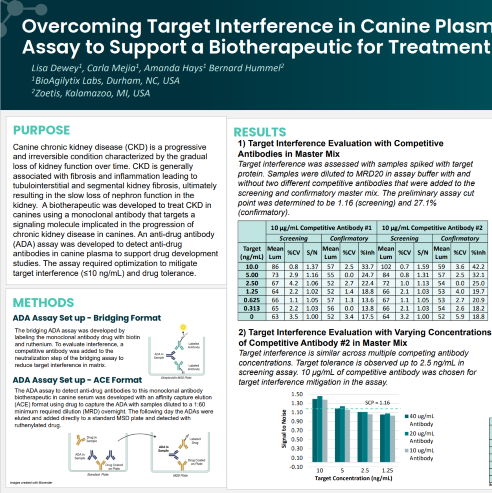
Overcoming Target Interference in Canine Plasma During Development of an ADA Assay to Support a Biotherapeutic for Treatment of Canine Chronic Kidney Disease
Share this Article


 Copied!