The Path to IDE/IVDR: Navigating the Evolving Regulatory Guidelines for Gene Therapies - JBF 2025
Purpose
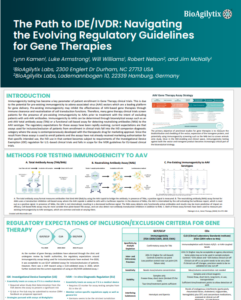
Immunogenicity testing has become a key parameter of patient enrollment in Gene Therapy clinical trials. This is due to the potential for pre-existing immunogenicity to adeno-associated virus (AAV) vectors which are a leading platform for gene delivery. Pre-existing immunogenicity may inhibit the effectiveness of AAV-based gene therapies through immune clearance and neutralization of cell transduction functions. Therefore, many gene therapy clinical trials screen patients for the presence of pre-existing immunogenicity to AAVs prior to treatment with the intent of excluding patients with anti-AAV antibodies. Immunogenicity to AAVs can be determined through bioanalytical assays such as an anti-AAV total antibody assay (TAb) or a functional cell-based assay for detecting neutralizing antibodies (NAb) to the AAV serotype. The regulatory expectations for these assays have been rapidly evolving; current expectations are that assays used for inclusion/exclusion of patients from enrollment in clinical trials fall into the IVD companion diagnostic category where the assay is contemporaneously developed with the therapeutic drug for marketing approval. Since the result from these assays is used to enroll patients and the assays have not already received marketing authorization for that specific intended use, the IVD use in that context becomes subject to requirements of the Investigational Device Exemption (IDE) regulation for U.S.-based clinical trials and falls in scope for the IVDR guidelines for EU-based clinical trials.
The Path to IDE/IVDR: Navigating the Evolving Regulatory Guidelines for Gene Therapies
Share this Article


 Copied!